This week, every family on the north Andhra coast is watching the same forecast. Cyclone Arnab is expected to cross the coast between Bapatla and Visakhapatnam around 28 October 2026, and Visakhapatnam is under a red alert (The Hindu).
If you live in a gated community in Vizag, or you are about to buy a home in one, it is a good moment to ask a practical question: how ready is my building, my flat and my community for a storm and days of heavy rain? This guide answers it in plain language, with a checklist you can use today and on every future site visit.
Quick answer: A gated community in Vizag cannot stop a cyclone, but a well-built and well-run one makes riding it out far easier. Check four things: how the building is built (structure, windows, balcony railings), what is planned for power and water when the grid fails, how the campus drains and how the community communicates in an emergency. Then prepare your own flat with a simple kit and a plan.
First, a note on safety. Always follow official advice from the India Meteorological Department (IMD), the district administration and the Andhra Pradesh State Disaster Management Authority. Nothing in this article replaces their instructions. If authorities ask you to move, move.
Why Vizag buyers should think about storms
Visakhapatnam is a coastal city. Cyclones in October and November, and heavy monsoon spells, are part of life here. Cyclone Hudhud in 2014 is still remembered across the city. Today's reports describe Arnab as a likely very severe cyclonic storm with winds of 115 to 125 kmph, gusting to 140 kmph, and heavy to very heavy rain over the district (New Indian Express, 26-10-2026).
That does not mean you should fear living in a tall building. It means you should judge a home on how it is built and run, not only on how it looks. A storm is the moment when the quiet specifications, like the frame, the windows, the generator and the drains, prove their value.
Key takeaway: Buy for the worst week of the year, not the best. Ask how a project handles wind, rain, power cuts and emergencies, and get the answers in writing.
The building: structure, windows and balconies
Start with what you cannot change after you move in: the structure and the outer skin of the building.
Structural frame. Ask what the frame is and which code it follows. MVV GV The Grand's specifications page lists an earthquake-resistant RCC framed structure in accordance with IS code. Any serious developer should be able to name the code and show approved structural drawings.
Walls. Find out the wall material and thickness. The Grand specifies table-moulded fly ash bricks with cement mortar, 6 inches thick for exterior walls and 4 inches for interior walls.
Windows. Wind-driven rain finds weak window seals first. The Grand specifies UPVC sliding windows with float or opaque glass, with MS safety grills near windows. Ask how the frames are sealed and check the drainage slots in the sliding track.
Balconies. The specification for balcony railings is SS railing with glass. In any building, clear balconies of loose items before a storm, because pots, chairs and drying stands become projectiles in strong wind.
Floors in wet areas. Anti-skid matt-finish vitrified tiles are specified for balconies and utility areas, which helps when rain blows in.
Questions to ask the site engineer
Which IS codes were used for structural design, including wind load?
How are window frames sealed against wind-driven rain?
Where does balcony and terrace water drain to, and how often are outlets cleaned?
Are there any glass façade elements, and how are they fixed?
The community plan: power, water and emergencies
After the structure, the next test is what happens when the city grid goes down. In a cyclone, power and water supply can be disrupted for hours or days. A gated community with its own systems carries more of that load.
Need during a storm | What to ask any project | What MVV GV The Grand lists |
|---|---|---|
Power | What does backup cover, and is changeover automatic? | 24-hour backup through automatic diesel generators; 100% backup to the building except ACs, geysers and refrigerators |
Water | What is the source and how much is stored? | Continuous water supply from borewell; 24x7 water |
Lifts | Which lifts run on backup? Is there a service lift? | 10-person automatic lifts from Johnson or Kone; service and cargo lifts |
Wastewater | Is there an on-site sewage treatment plant? | Sewage treatment plant (STP) |
Fire and evacuation | Is there a fire system and a marked assembly point? | Fire protection system; emergency assembly point |
Security and visibility | Who watches the gate and the common areas? | 24x7 security; CCTV and security intelligence; surveillance cameras in all common areas |
Help on the ground | Is there staff on site round the clock? | On-site management; round-the-clock maintenance; estate maintenance crew for each block |
The line on power backup matters. Backup that covers lights, fans, lifts and pumps keeps a building liveable during an outage. It is normal that heavy loads like ACs and geysers are left out, and The Grand states this openly on its amenities and specifications pages. Plan for it: keep phones and power banks charged before the storm arrives.
Medical help is the other question. The Grand's location page lists Ujhwal Hospital about 2 minutes away and Care, Medicover and Apollo hospitals about 10 minutes away, and the amenities list includes on-site clinics. During a storm, roads may be blocked, so know the nearest options before you need them.
The campus: drainage, trees and open areas
Heavy rain tests the ground around the towers as much as the towers themselves. Walk the campus with these questions in mind:
Drains. Are storm-water drains covered, sized for heavy rain and cleaned before the monsoon and cyclone season?
Basement and parking. If there is lower-level parking, how is water kept out, and are there pumps on backup power?
Trees and landscaping. Are trees near the towers pruned before the season? The Grand has landscaped lawns, a landscaped water body and a walking and jogging track, which are lovely in good weather and need maintenance before bad weather.
Open spaces for assembly. Is there a clear, signposted area for people to gather if a building must be evacuated? The Grand lists an emergency assembly point.
Approach roads. Inside the gate is only half the story. Residents in some Madhurawada wards have raised drainage concerns in recent local news coverage, so drive the approach road after a heavy shower before you buy.
Your flat: a simple storm-ready checklist
Whatever building you live in, a little preparation goes a long way. Here is a short checklist for the day before a cyclone or a heavy-rain warning:
Charge phones and power banks, and keep a torch with spare batteries.
Store drinking water and some ready-to-eat food for two to three days.
Keep medicines, copies of ID and property documents in a waterproof pouch.
Clear the balcony of pots, furniture and anything that can fly.
Close and latch all windows; keep curtains drawn to reduce the risk from broken glass.
Unplug sensitive electronics if there are voltage fluctuations.
Note the security desk number and your block's maintenance contact.
Check on elderly neighbours and families with small children on your floor.
Follow updates only from official channels and avoid forwarding rumours.
Do not use the lift if power is fluctuating; use the stairs carefully.
Key takeaway: A good gated community gives you strong basics: a sound structure, backup power, stored water, staff on site and a plan. Your own ten-minute preparation does the rest.
How the community can help on the day
One of the real advantages of community living is that you are not alone. A well-run gated community can share alerts through its visitor and community app, keep a list of residents who may need help, and have maintenance staff ready to clear drains and check common areas once it is safe.
At MVV GV The Grand, residents will have MyGate for visitor management and an estate maintenance crew for each block, which makes it easier to communicate and respond quickly. Ask any project you are considering how it plans to use these tools in an emergency, and whether the residents' association runs a yearly drill.
Use this checklist on your next site visit
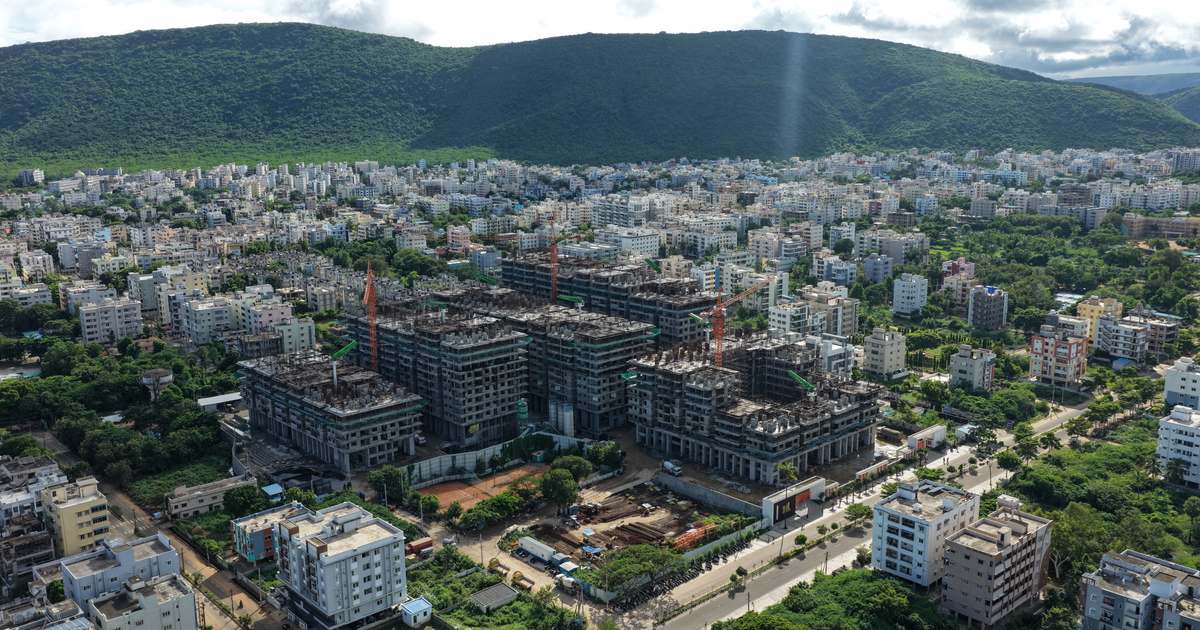
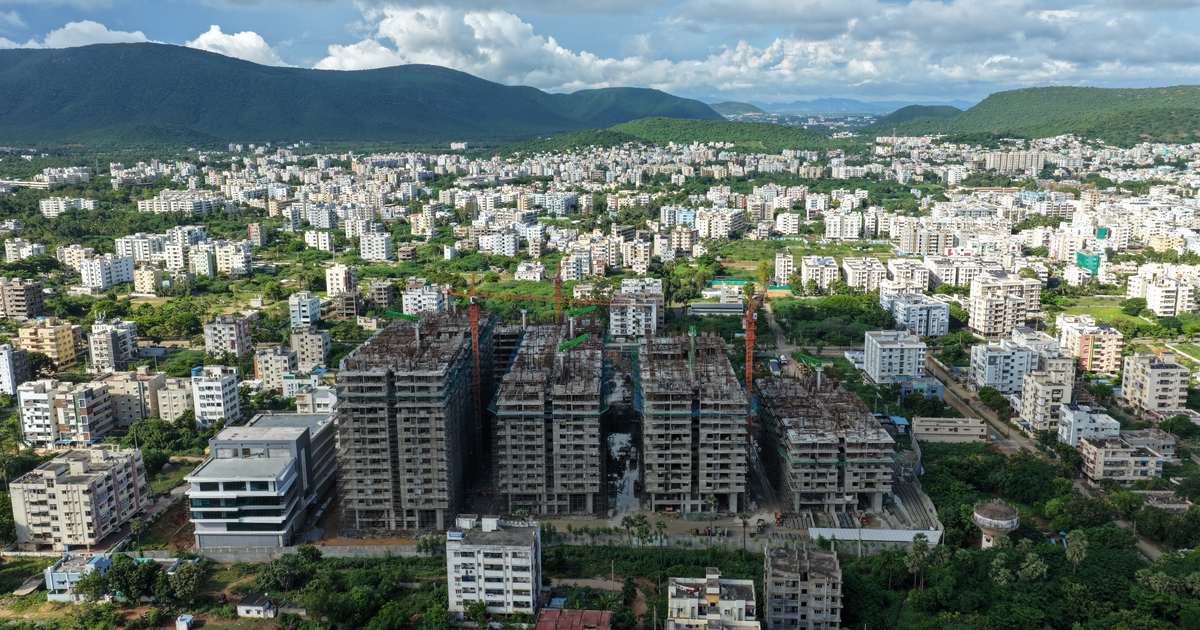
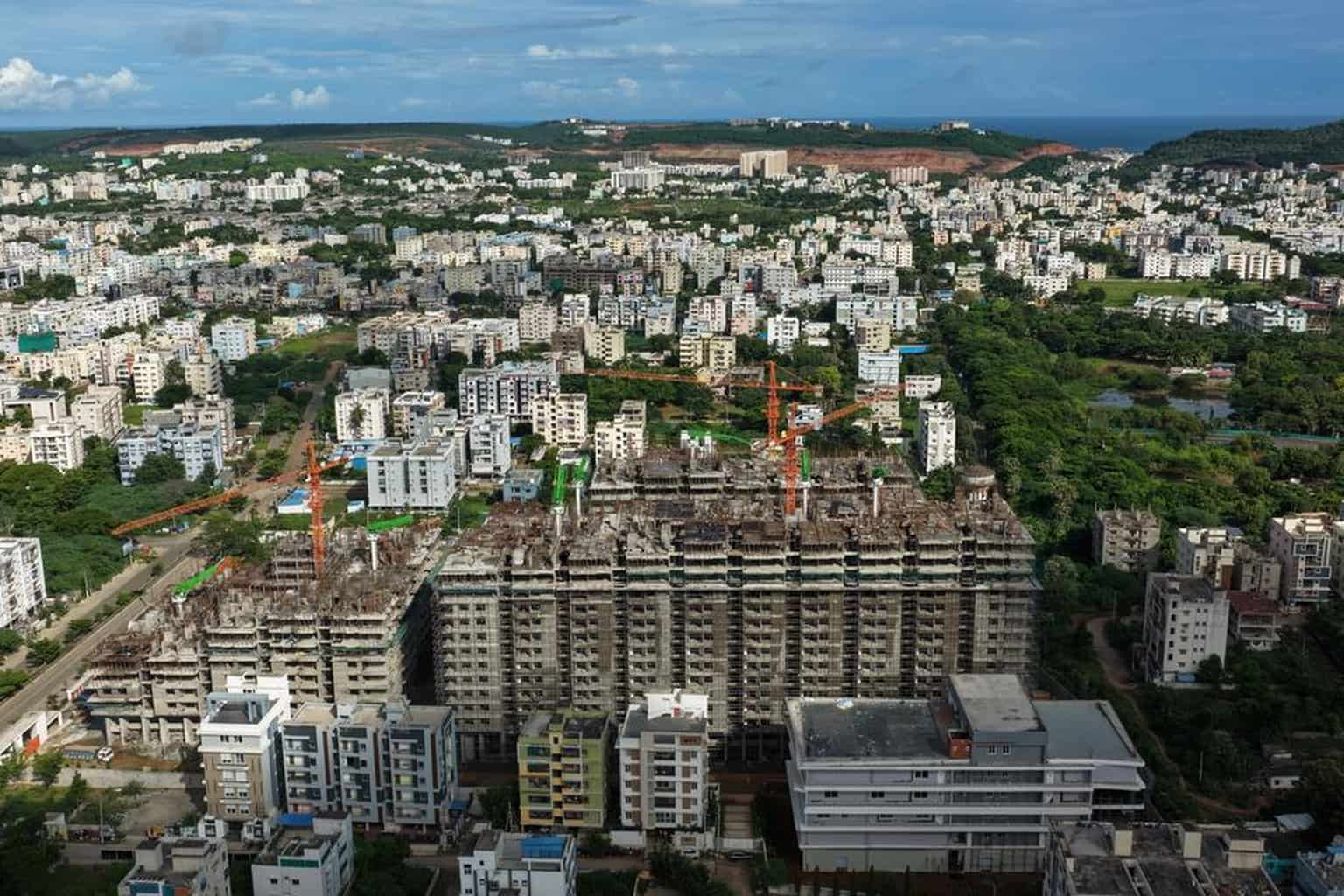
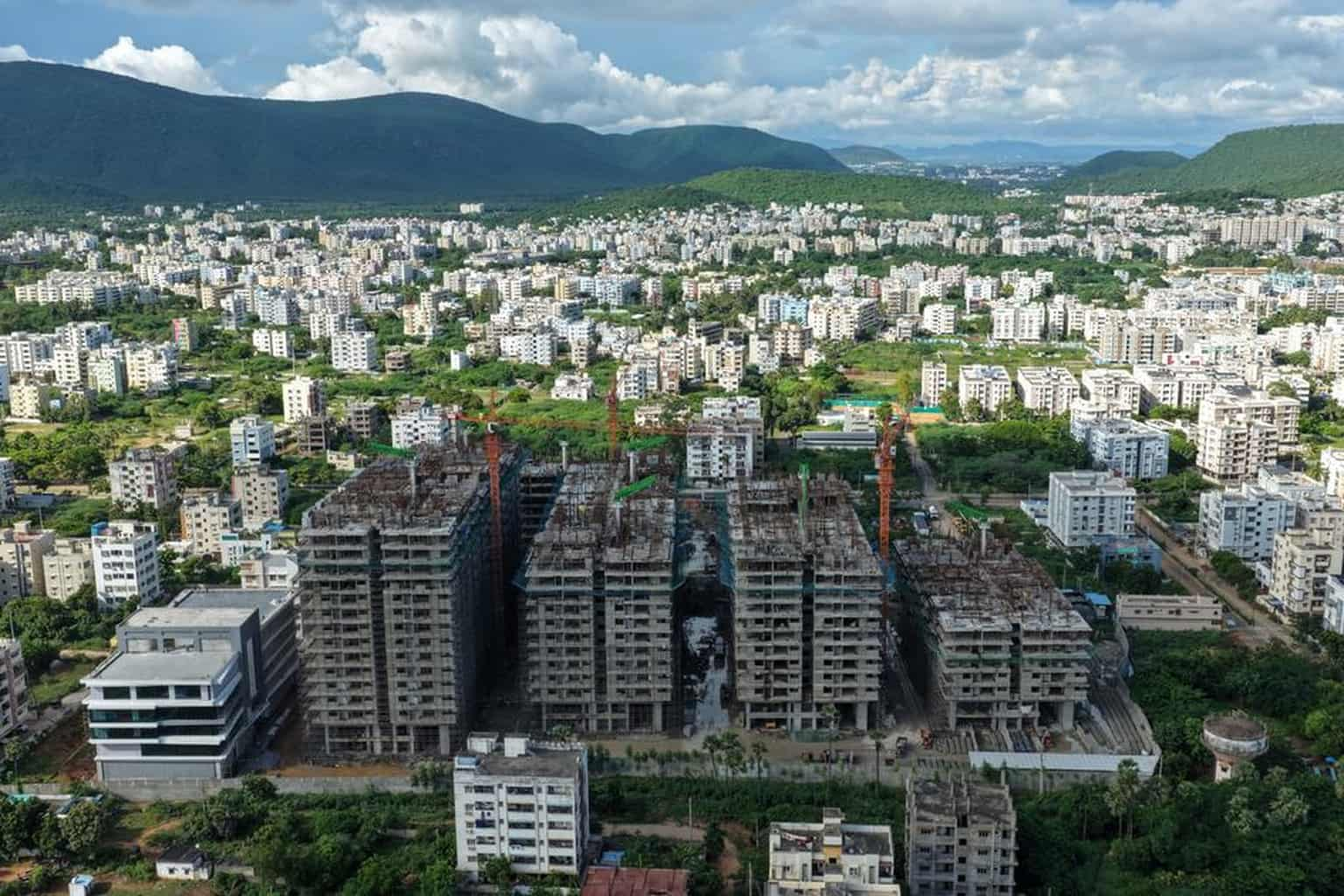
If you are comparing homes, take this list with you. Ask to see the specification sheet, the generator room, the water storage and the drainage plan. Watch the project progress updates to see how the towers are being built, and ask the engineers your questions directly. A builder who is happy to talk about the worst week of the year is usually a builder who has planned for it.
Book your site visit
See the towers, the clubhouse and the floor plans in person, with a team that will answer every question in writing. Call +91 98489 16600 or send an enquiry on our contact page. Prefer to look first? Take the virtual tour.
Frequently asked questions
Is a high-rise flat safe during a cyclone in Vizag?
A well-designed RCC framed building built to Indian codes is generally a safe place to shelter, provided you stay indoors, keep windows shut and away from glass, and follow official advice. If the authorities order an evacuation, always follow it.
What should I check in a gated community in Vizag before cyclone season?
Check the structural specification, window and balcony details, what the power backup covers, water storage, storm-water drainage, fire safety, an emergency assembly point, and whether staff are on site round the clock.
What does earthquake-resistant RCC framed structure mean?
It means the building is carried by a reinforced cement concrete frame of columns and beams designed to Indian Standard codes for seismic forces. MVV GV The Grand's specifications list an earthquake-resistant RCC framed structure in accordance with IS code.
Does power backup cover air conditioners during an outage?
Usually not. At MVV GV The Grand, the specifications state 100% power backup through automatic diesel generators to the building, except ACs, geysers and refrigerators.
What should I keep ready in my flat before a cyclone?
Charged phones and power banks, a torch, drinking water and food for two to three days, medicines, and copies of important documents in a waterproof pouch. Clear the balcony and latch all windows.