
Waste is not the most exciting topic on a site visit, but it is one of the things residents notice every single day. It is also now a legal duty. The Union Environment Ministry notified the Solid Waste Management Rules, 2026, which came into force on 1 April 2026 and made four-stream segregation at source mandatory (PIB, 28-01-2026).
This guide explains what waste segregation in gated communities looks like under the new rules, what it means for families in Vizag, and what to ask before you buy a flat. With Cyclone Arnab bringing rain and strong winds to the coast this week, and fallen trees already reported in parts of Visakhapatnam (The Hindu live updates, 27-10-2026), clean drains and quick debris clearing matter more than ever.
Quick answer: Since 1 April 2026, India's Solid Waste Management Rules require waste to be separated at source into four streams: wet, dry, sanitary and special care waste. Large residential societies can also count as bulk waste generators, with extra duties to process wet waste. For residents, that means a four-bin habit at home; for buyers, it means asking how a community collects, stores and processes its waste.
The SWM Rules 2026 explained for gated communities
The 2026 rules replace the Solid Waste Management Rules, 2016. They are built on two ideas: separate waste where it is produced, and make the people who produce large amounts of waste responsible for handling it properly.
The four streams, in plain words
According to the government's summary of the rules (PIB), every household now separates waste into four streams:
Stream | Examples | Where it goes |
|---|---|---|
Wet waste | Kitchen waste, vegetable and fruit peels, meat, flowers | Composting or bio-methanation |
Dry waste | Plastic, paper, metal, glass, wood, rubber | Material recovery facilities for sorting and recycling |
Sanitary waste | Used diapers, sanitary towels and similar items | Securely wrapped and stored separately |
Special care waste | Paint cans, bulbs, mercury thermometers, medicines | Authorised agencies or designated collection centres |
The rules also allow local bodies to charge user fees according to their bye-laws, and they provide for environmental compensation, based on the polluter pays principle, for violations such as improper waste management. The Central Pollution Control Board runs an online portal for the solid waste management system.
Is your residential society a bulk waste generator?
This is the part that matters most for large communities. The rules define bulk waste generators as entities with a floor area of 20,000 square metres or more, or water use of 40,000 litres a day or more, or waste generation of 100 kg a day or more, and they specifically include residential societies (PIB).
Bulk waste generators must make sure their waste is collected, transported and processed in an environmentally sound way. They must process wet waste on-site as far as possible or obtain an Extended Bulk Waste Generator Responsibility (EBWGR) certificate where on-site processing is not feasible.
Key takeaway: In a large gated community, waste is no longer only the municipality's job. Ask the builder and the residents' association how the community will meet the 2026 rules, who will run it and how the cost will be shared.
Why this matters in Madhurawada
Madhurawada is one of Vizag's fastest-growing residential areas, and civic services are a live topic. Ahead of the GVMC elections, residents have flagged poor roads and drains in parts of the area (The Hindu). Where municipal services are stretched, a community that manages its own waste well protects residents from overflowing bins, blocked drains and smells.
How a well-run gated community handles waste
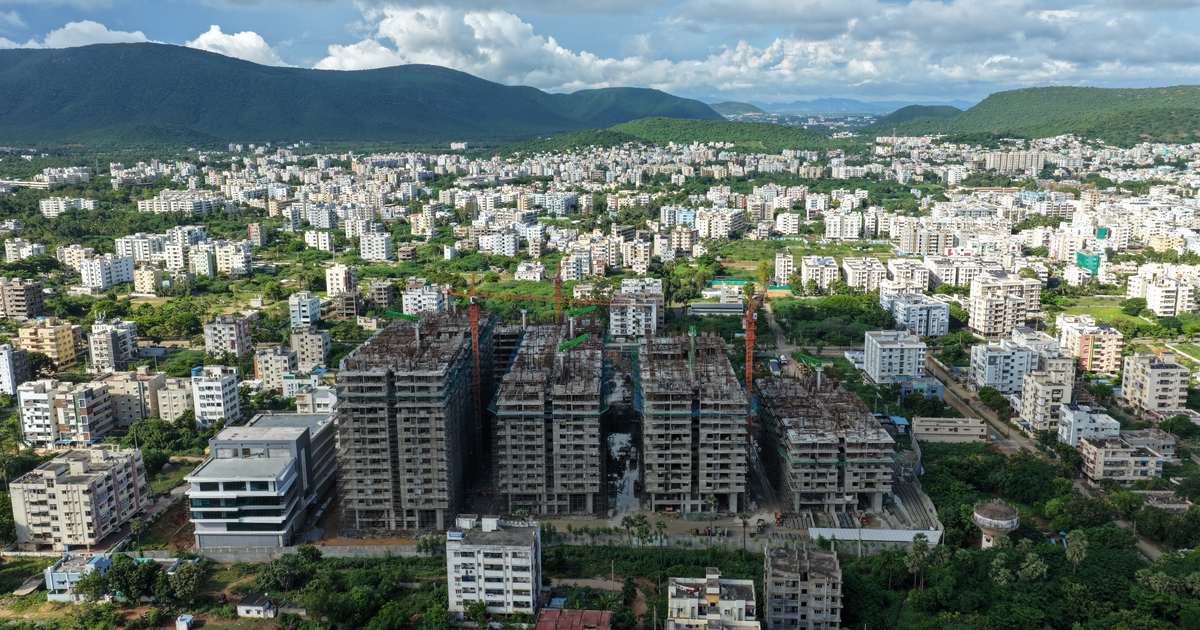
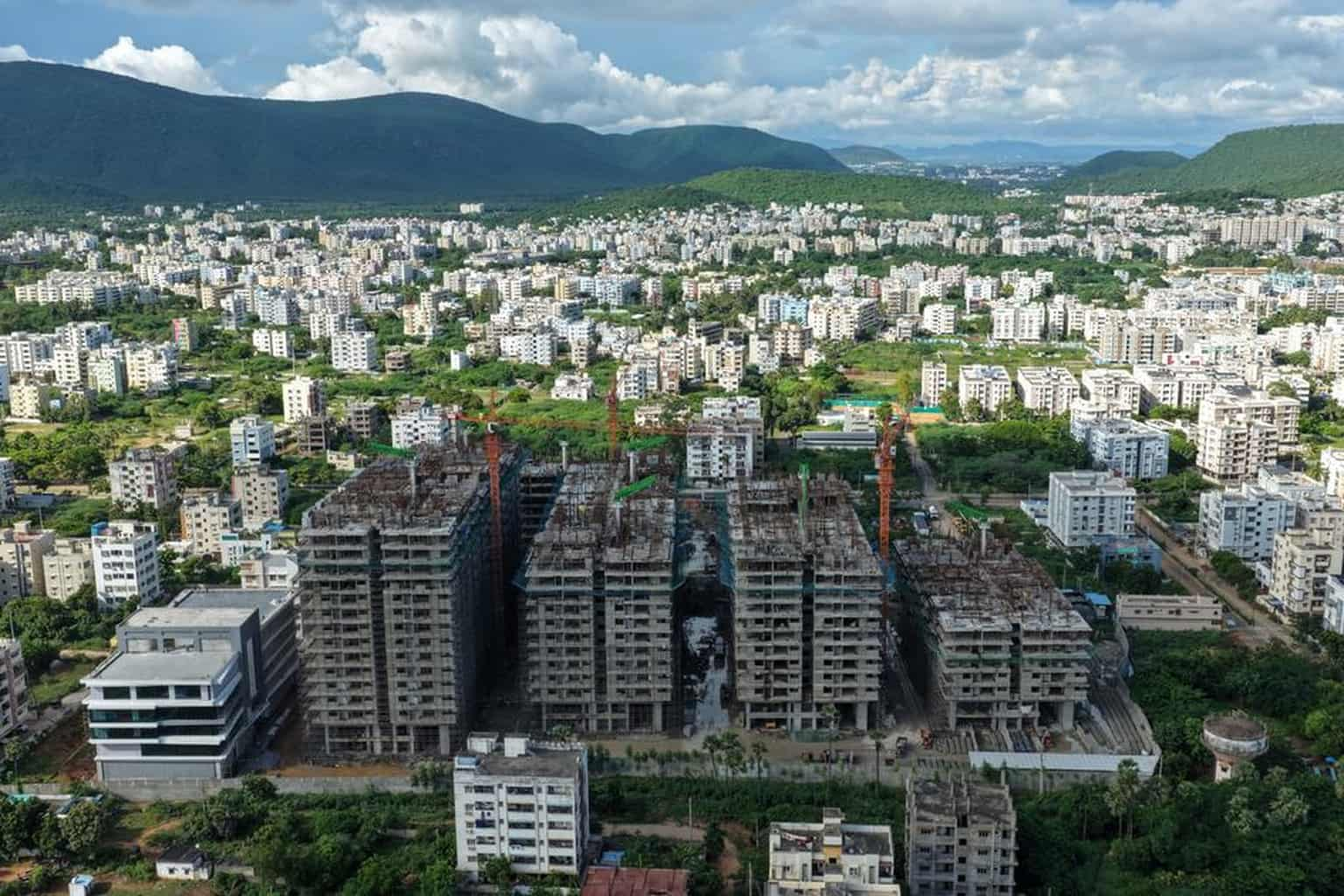
MVV GV The Grand is a GVMC-approved gated community in Madhurawada, registered under AP RERA No. P03280073150. Its amenities page lists several services that support clean, organised waste handling:
Valet trash, so waste can be collected without residents carrying bags through common areas.
An estate maintenance crew for each block, which helps keep corridors, chutes and bin areas clean.
A sewage treatment plant (STP) for wastewater.
An outdoor mosquito trap, useful in a coastal city after rain.
On-site management and round-the-clock maintenance, so problems are fixed quickly.
The website does not give the full waste-processing plan, such as composting arrangements or collection timings. Ask the sales team for these details on your visit, and ask for the answers in writing.
Questions to ask before you buy
How will waste be collected from each flat, and at what times?
Will there be separate bins for wet, dry, sanitary and special care waste on each floor or in each block?
Is there a plan to compost or process wet waste on the campus?
Who will collect dry waste for recycling, and where will special care waste such as bulbs and old medicines go?
Will the community be registered as a bulk waste generator, and who will handle the paperwork?
How is the cost of waste management included in the monthly maintenance?
A four-bin routine for your flat
The rules only work if every household follows them. A simple routine helps:
Keep two main bins in the kitchen, one for wet waste and one for dry waste. Rinse food containers before putting them in dry waste.
Use a small lidded bin for sanitary waste, and wrap items securely before disposal.
Keep a box for special care waste, such as used batteries, bulbs and expired medicines, and hand it over only at designated collection points.
Teach children the colours or labels your community uses, so the habit sticks.
Do not put cooking oil or food scraps down the sink. This helps the plumbing and the STP.
How residents' associations can make it work
Rules on paper only work when a community turns them into habits. Associations that manage segregation well tend to do a few simple things:
Label everything clearly. Bins on each floor and in the collection area carry the same labels or colours as the bins in each flat.
Check at the source. Housekeeping staff gently flag mixed bags at the door instead of accepting them, and the association follows up with a friendly reminder.
Share simple numbers. A monthly note on how much waste was composted or sent for recycling keeps residents interested.
Plan for festivals. Diwali and other festivals bring extra packaging, flowers and firecracker waste. Extra collection rounds that week stop bins overflowing.
Train new residents. A one-page guide in the welcome kit explains the four streams, the collection timings and where special care waste goes.
None of this is expensive. It mostly needs a clear plan from day one and a maintenance team that follows it.
After the storm: debris, drains and mosquitoes
Cyclones and heavy rain create extra waste: fallen branches, broken pots, wet cardboard and debris on roads and in drains. A community with a clear plan handles this far better. After Cyclone Arnab passes, and only once authorities say it is safe, the clean-up should focus on:
Clearing drains and gratings so water does not stand in basements, roads or play areas.
Collecting fallen branches and garden waste separately from household waste.
Removing standing water from pots, terraces and corners to reduce mosquito breeding.
Checking that bins and collection areas are not damaged or blocked.
For residents, the simplest help is to keep balconies clear before a storm, keep waste bagged and indoors until collection resumes, and report blocked drains to the maintenance team.
Good waste habits protect your home's value
Clean common areas, working drains and a well-run collection system make a community pleasant to live in and attractive to future buyers and tenants. When you compare homes, put waste management on your list next to power backup and water, security and the clubhouse. Follow the project progress updates, and ask the team to show you where bin areas and service lifts are planned.
Book your site visit
See the towers, the clubhouse and the floor plans in person, with a team that will answer every question in writing. Call +91 98489 16600 or send an enquiry on our contact page. Prefer to look first? Take the virtual tour.
Frequently asked questions
What is four-stream waste segregation?
Under the Solid Waste Management Rules, 2026, waste must be separated at source into wet waste, dry waste, sanitary waste and special care waste. The rules came into force on 1 April 2026.
Is a gated community a bulk waste generator under the SWM Rules 2026?
It can be. The rules define bulk waste generators as entities with 20,000 square metres or more of floor area, or water use of 40,000 litres a day or more, or waste of 100 kg a day or more, and they include residential societies. Check with your local body whether your community qualifies.
What must bulk waste generators do with wet waste?
They must process wet waste on-site as far as possible, or obtain an Extended Bulk Waste Generator Responsibility certificate where on-site processing is not feasible.
How does MVV GV The Grand plan to handle waste?
The amenities page lists valet trash, an estate maintenance crew for each block, a sewage treatment plant, an outdoor mosquito trap and round-the-clock maintenance. Ask the sales team for details of collection timings and wet-waste processing.
Where should I dispose of old medicines and bulbs?
They are special care waste under the 2026 rules. Keep them separate and hand them to authorised agencies or designated collection centres, not in the regular bin.