
If you have been planning to buy a flat in Vizag this festive season, October brought news you cannot ignore. On 7 October 2026 the Reserve Bank of India raised the repo rate by 25 basis points to 5.50% (RBI press release). A week later, State Bank of India raised its external benchmark lending rate from 7.90% to 8.15%, effective 15 October (The Economic Times). For anyone on a floating-rate loan, a home loan interest rate hike like this flows straight into the EMI.
This guide explains what changed, what it costs and what buyers in Madhurawada and the rest of Visakhapatnam can do. It is general information, not financial advice, so always confirm the final numbers with your bank.
Quick answer: A home loan interest rate hike makes new floating-rate loans dearer and, for existing borrowers, raises the EMI or stretches the tenure when the bank resets the rate. A 0.25% rise is small on a monthly basis but adds up over 20 years. Do not panic or rush: stress-test your budget at a higher rate, compare the bank's spread, plan prepayments and focus on choosing the right home.
The 2026 home loan interest rate hike, explained for Vizag buyers
Most home loans in India today are linked to an external benchmark, usually the RBI repo rate. Your rate is the benchmark plus a spread that the bank sets based on your credit profile. When the repo rate goes up, the bank's benchmark goes up, and at the next reset your rate follows.
What changed in October 2026
Repo rate up to 5.50%. The RBI's Monetary Policy Committee met from 5 to 7 October 2026 and raised the policy repo rate by 25 basis points.
A tighter stance. The MPC described its stance as calibrated tightening. In simple terms, rate cuts are unlikely in the near term.
Banks passed it on quickly. SBI raised its EBLR to 8.15% plus credit risk premium and its repo-linked lending rate to 7.75% plus credit risk premium from 15 October 2026. Other lenders usually follow a similar path.
Next review in December. The next MPC meeting is scheduled for 2 to 4 December 2026, so watch that date if you are about to sign.
How much does a 0.25% hike add to your EMI?
The answer depends on your loan amount and tenure. Using an illustration published by Mint with BankBazaar data, a loan of Rs 50 lakh over 20 years at 8% has an EMI of about Rs 41,822. At 8.25% it rises to about Rs 42,603, an increase of roughly Rs 781 a month (Mint).
Example (Rs 50 lakh, 20 years) | Rate | What happens |
|---|---|---|
Before the hike | 8.00% | EMI of about Rs 41,822 |
Keep the tenure, pay more | 8.25% | EMI of about Rs 42,603 (about Rs 781 more each month) |
Keep the EMI, extend the tenure | 8.25% | About 12 more months of EMIs and about Rs 4.96 lakh more interest over the loan |
These are illustrations from the source, not a quote. Your EMI depends on your bank, spread and credit score.
Key takeaway: When a bank resets your rate, it often extends the tenure by default instead of raising the EMI. If you can afford it, ask for a higher EMI instead. It usually saves far more interest over the life of the loan.
Should you wait for rates to fall before buying?
Nobody can time interest rates reliably, and the RBI has signalled that cuts are not likely soon. Meanwhile, the right home in the right location does not wait for the rate cycle. A floating-rate loan also moves down when rates eventually fall, so the rate you start with is not the rate you are locked into for 20 years.
A better approach is to decide whether the purchase is affordable even if rates rise a little further. If your budget only works at today's rate, the loan is too big. If it still works with a cushion, the timing matters less than the quality of the home and the builder.
Stress-test your budget before you book
Ask your bank for an EMI quote at today's rate for your loan amount and tenure.
Ask for a second quote at a rate about 1% higher. This is your safety check.
Add the monthly costs that come with any home: maintenance, insurance and your usual savings.
If the higher-rate EMI still fits comfortably, you are in a strong position to buy.
Floating or fixed: which suits you now?
A floating rate moves with the benchmark. It rises after a hike and falls when rates are cut. A fixed rate stays the same for a set period but is usually priced higher at the start, and many fixed loans convert to floating after a few years.
Floating rates remain common for 15 to 20 year loans because they benefit when rates come down. A fixed rate suits buyers who value a predictable EMI. Either way, read the conversion, reset and prepayment terms first.
Buying under construction? How disbursement and pre-EMI work
If you buy a flat that is still being built, the bank usually does not release the full loan on day one. It pays the builder in stages as construction reaches agreed milestones, and you pay interest only on the amount released so far. Until the final disbursement, many banks let you choose between:
Pre-EMI: you pay only the interest on the amount disbursed. Your monthly outgo is lower now, but your principal does not start falling until full EMIs begin.
Full EMI from the start: you pay principal and interest on the amount disbursed. It costs more each month but reduces the total interest you pay.
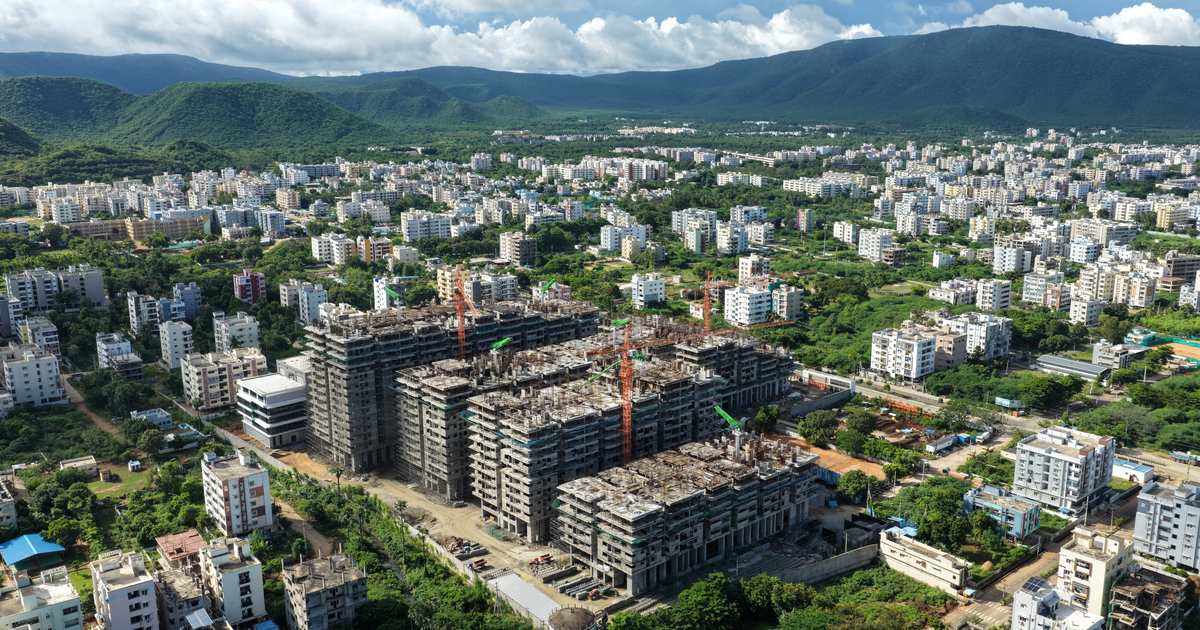
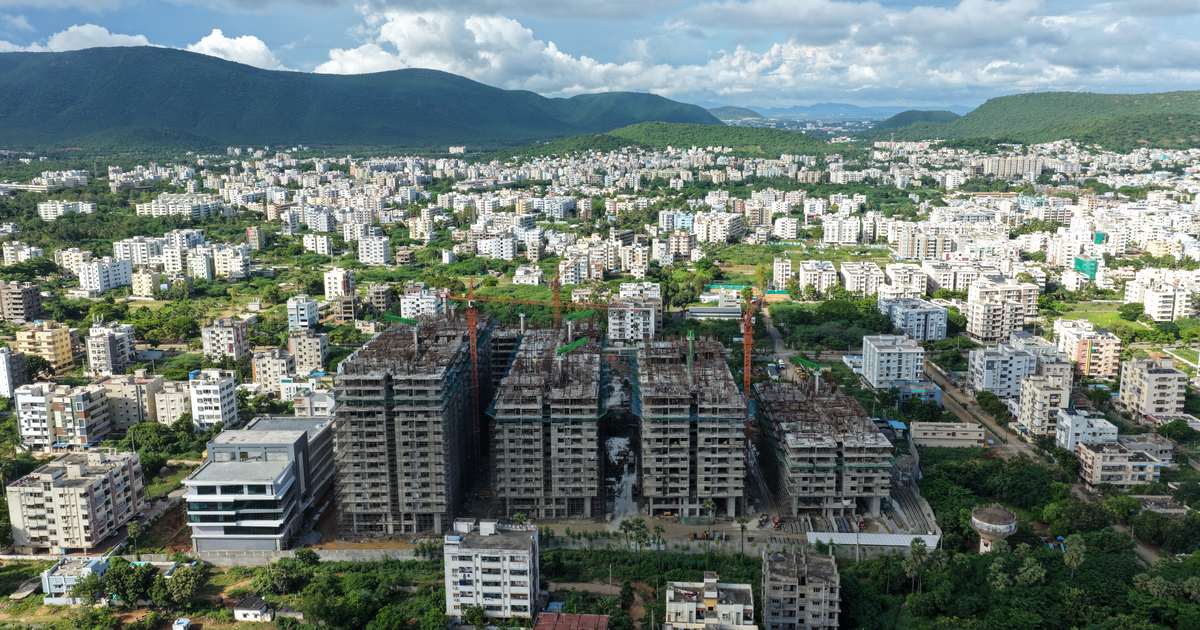
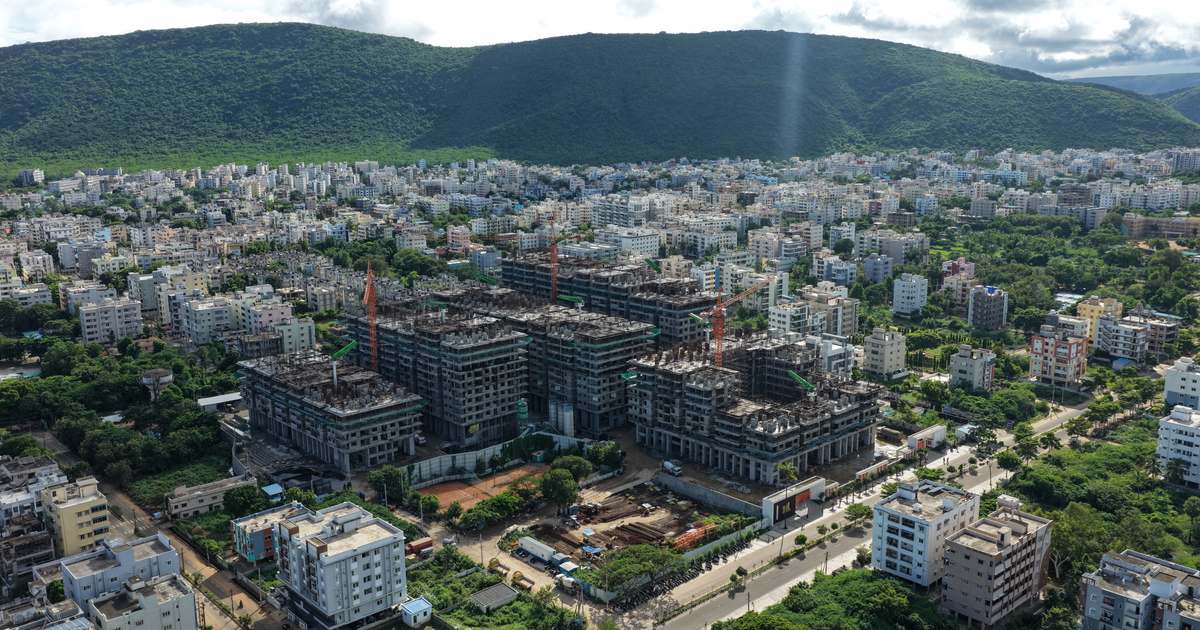
A rate hike affects both. If you are on pre-EMI, the hike raises your interest payment on every rupee already released. This is one reason to check how construction is moving before you buy. MVV GV The Grand publishes month-by-month photos on its project progress page, so you can see how the towers are rising. For a wider comparison of the two routes, read our guide on ready-to-move vs under-construction flats in Madhurawada.
Five ways to soften a higher EMI
Make a larger down payment. A smaller loan means a smaller EMI and less interest at any rate.
Protect your credit score. The spread over the benchmark often depends on it, and a better score can mean a lower rate.
Compare the spread, not just the headline rate. Two banks on the same benchmark can charge quite different spreads.
Choose a higher EMI over a longer tenure when your rate is reset, if your budget allows.
Prepay when you can. Bonuses and annual increments can go towards the principal. Under RBI rules, banks generally cannot charge prepayment penalties on floating-rate home loans taken by individuals, but confirm the terms in your sanction letter.
Questions to ask the bank and the builder
Before you sign, put these questions to both sides and keep the answers in writing:
Bank: Which benchmark is my loan linked to, what is my spread, how often is the rate reset, and what happens to my EMI or tenure after a hike?
Builder: What is the AP RERA registration number? For MVV GV The Grand it is P03280073150. Lenders and buyers can check it on the AP RERA portal. Our guide to RERA-approved projects in Vizag explains why it matters.
Builder: Which banks are already lending for this project, and how is the payment schedule linked to construction stages?
Why the home still matters more than the rate
Interest rates go up and down several times over a 20-year loan. The building, the location and the builder stay with you.
MVV GV The Grand is a GVMC-approved gated community of 3 BHK apartments at Madhurawada, registered under AP RERA No. P03280073150. Its specifications page lists an earthquake-resistant RCC framed structure designed as per IS code, 24-hour DG power backup for the apartments (except ACs, geysers and refrigerators), continuous water supply from bore wells, surveillance cameras in common areas and EV charging points in the parking area. You can compare layouts on the floor plans page and see the clubhouse and other amenities in person on a site visit.
Book your site visit
See the towers, the clubhouse and the floor plans in person, with a team that will answer every question in writing. Call +91 98489 16600 or send an enquiry on our contact page. Prefer to look first? Take the virtual tour.
Frequently asked questions
Will the October 2026 repo rate hike increase my existing home loan EMI?
If your loan is on a floating rate linked to the repo rate or the bank's external benchmark, your rate will usually rise at the next reset. The bank may raise your EMI or, more often, extend your tenure. Ask your bank which option it has applied and whether you can choose a higher EMI instead.
Is it a good time to buy a house when home loan rates are rising?
It can be, if the purchase is affordable even at a slightly higher rate. Nobody can time rate cycles, and floating rates fall when the RBI cuts rates. Stress-test your budget at about 1% above today's rate and focus on the quality of the home and the builder.
Should I choose a fixed or floating home loan after the rate hike?
Floating rates move with the benchmark, so they rise now but fall later. Fixed rates give a steady EMI for a period but usually start higher and may convert to floating. Compare the total cost, reset terms and prepayment rules before choosing.
Is it better to increase the EMI or the tenure after a rate hike?
If you can afford it, increasing the EMI usually saves more interest. In one published example, keeping the EMI unchanged on a Rs 50 lakh, 20-year loan after a 0.25% hike added about 12 months and roughly Rs 4.96 lakh in interest.
How does a rate hike affect a loan for an under-construction flat?
Banks release the loan in stages as construction progresses, and you pay interest on the amount released. A hike raises the interest on that amount, whether you pay pre-EMI or full EMI. Paying full EMI from the start reduces the total interest.